|
Islamabad: Pakistan
Telecommunication Authority (PTA) and State Bank of Pakistan (SBP) have agreed
to formulate “Third Party Mobile Banking Regulations”. A significant development
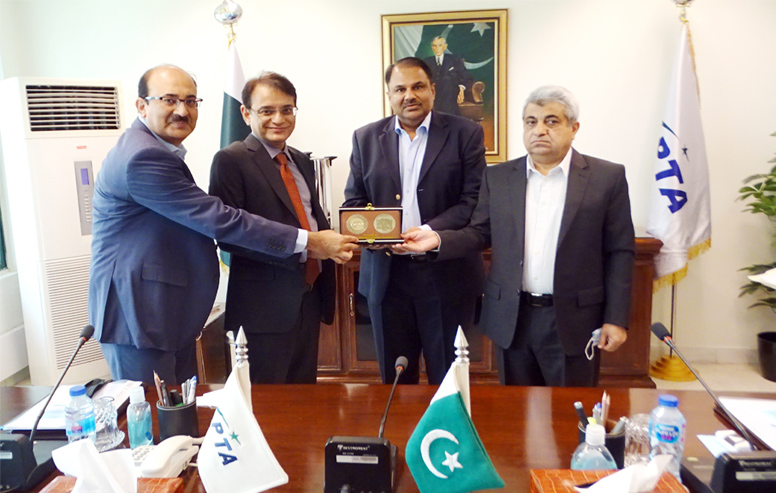
in this respect incurred today when Chairman PTA Dr. Mohammed Yaseen met
Governor SBP Syed Salim Raza at State Bank of Pakistan, Karachi. Heads of the two regulators discussed
the proposed Regulations originally drafted by PTA and announced a “Joint
Regulatory Committee” consisting of officials from the State Bank and PTA which
will work on the draft regulations, finalizing its suggestions and
recommendations within three months timeframe.
The draft of the Regulations
addresses the ongoing debate over different models of providing mobile banking
services which include ‘Telecom-led model’ and ‘Bank-led model. The proposed
“Third Party Mobile Banking Regulations” offer an intermediary model for opting
the mobile banking services taking in account the concern and responsibilities
of both financial institutes and mobile operators.
During the discussion, Chairman
PTA said that the mobile phone communication sector has shown an enormous growth
in Pakistan; thus creating striking opportunities for service providers and
consumers to utilize mobile networks for carrying out various daily life tasks
such as financial transactions. He also highlighted salient features of draft
regulations including operators’ obligations, arrangements between operators and
financial institutes and Dispute Settlement Mechanism. PTA has been thoroughly
working with State Bank on drafting a sound regulatory framework in order to
facilitate potential stakeholders interested in introducing true mobile banking
services in the country. The primary objective of this collaboration is to
develop a unified regulatory framework, since mobile banking engrosses both
financial institutes and mobile phone operators.
Governor State Bank appreciated this initiative by PTA and
considered it an important development for the banking and telecom sectors of
the country. He said that advancements in telecom technologies have positively
affected other sectors and innovative products have been introduced. He said
that customers of mobile operators and financial institutions will be benefited
from Mobile Banking Services and these regulations will ensure their security
and satisfaction.
At the end of the meeting
during a joint statement, both regulatory heads endorsed the proposed “Third
Party Mobile Banking Regulations” and aimed to continue mutual coordination for
setting up a fair and non-discriminatory regulatory framework for the mobile
banking service providers.
It may be mentioned that Mobile
Banking is increasingly being employed by financial institutes in collaboration
with mobile operators around the world to generate additional revenues, reduce
costs or to increase customer satisfaction, often with very promising results.
There is no universal form of m-banking; rather, purposes and structures vary
from country to country. The systems offer a variety of financial functions,
including micro-payments to merchants, bill-payments to utilities,
Person-to-Person (P2P) transfers between individuals, and long-distance
remittances. Currently, different institutional and business models deliver
these systems.
Khurram
A. Mehran
Director
(PR)
|